I woke up early that Sunday morning at a Michi-no-eki in Kainan. The parking lot had been nearly empty when we arrived the night before. By the time I’d washed my face and walked back outside with my coffee, it was filling fast.
People kept coming. Cars streaming in, a line forming around the corner of the building even though the shop wasn’t open yet. I didn’t know what was happening, but I could feel it: that sense that everyone knew something I didn’t.
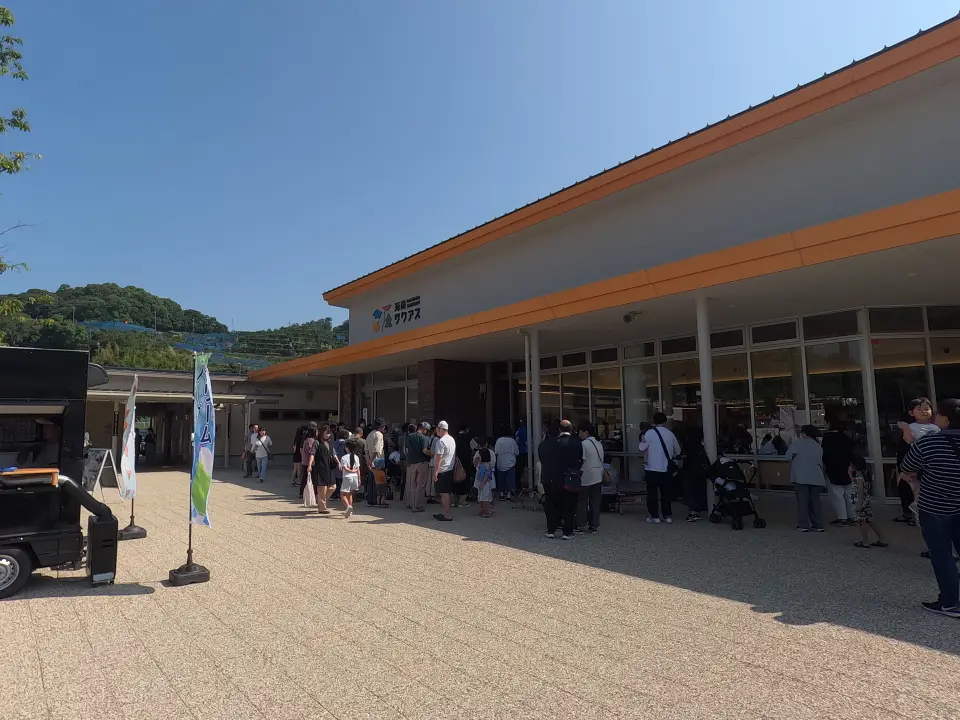
Have you ever stood in a crowd of strangers and wanted to understand what brought them all there?
I sat down at a small table in a shaded area and watched. That’s when a man with a road bicycle parked nearby and sat down at the table next to mine. He looked my way and smiled.
A few minutes passed. I’m naturally shy, but curiosity got the better of me. I asked him what was happening.
He answered in English, carefully choosing his words. There was a Sunday morning market here, he explained. Local vegetables, fresh seafood. People come every week. We settled into a conversation, him speaking English, me following his lead even though we could have spoken Japanese. It seemed important to him to practice, so I let him.
He told me his brother owned a farm nearby. He gestured to his bicycle and said he liked to ride about 45 kilometers at a time. It kept him in shape, he said with a bit of pride. Then he mentioned an American student his family had hosted once, as if to say he was familiar with people from other places.
We talked for a bit longer. Then he did something I didn’t expect.
He asked if I wanted to go for a walk with him.
The Invitation That Changed the Morning
He asked if I wanted to go for a walk with him.
We were still speaking English. His vocabulary was limited, so when he gestured down the street and mentioned manju, the traditional sweet buns filled with red bean paste, I wasn’t entirely sure where he was taking me. But I said, “Yes.”
We walked about two blocks together, him leading the way, me trusting that this stranger who’d smiled at me over coffee had good intentions. And he did.
He brought me to a small manju shop tucked into the neighborhood. It quickly became obvious from the friendly conversation he was having with the lady who owned the shop that they knew each other. He told me, with pride in his voice, that this was the best manju in the area. Then he bought a box for me before I could even reach for my wallet.
“Nice to meet you,” he said, handing me the box.
We walked back to the parking lot, and he asked if he could meet my wife. We went over to our car where she was still waking up. I tapped on the window. When she stepped out, he greeted her warmly, switching to Japanese now that there were three of us. My wife thanked him for his kindness and for the manju. He seemed genuinely happy to have made our acquaintance.
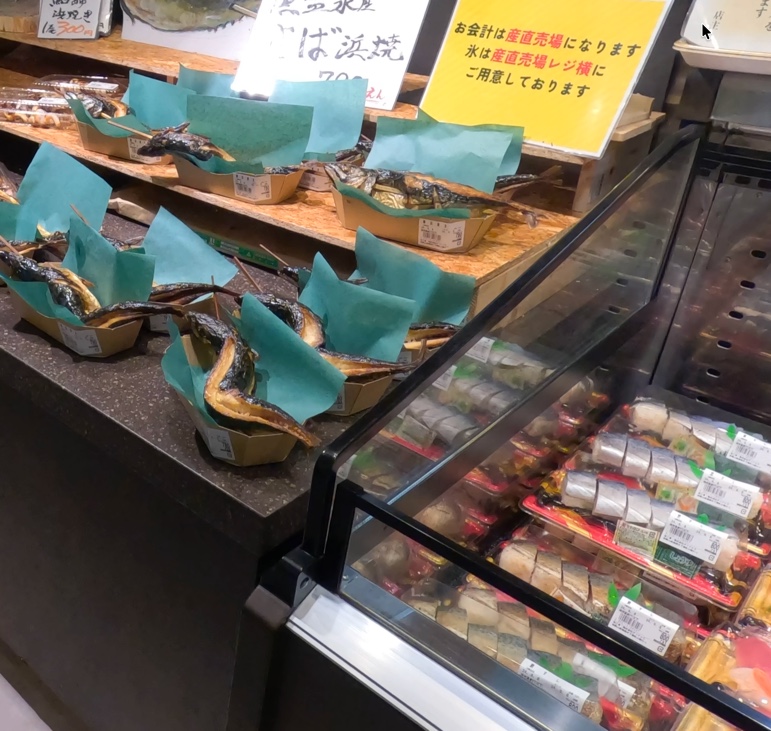
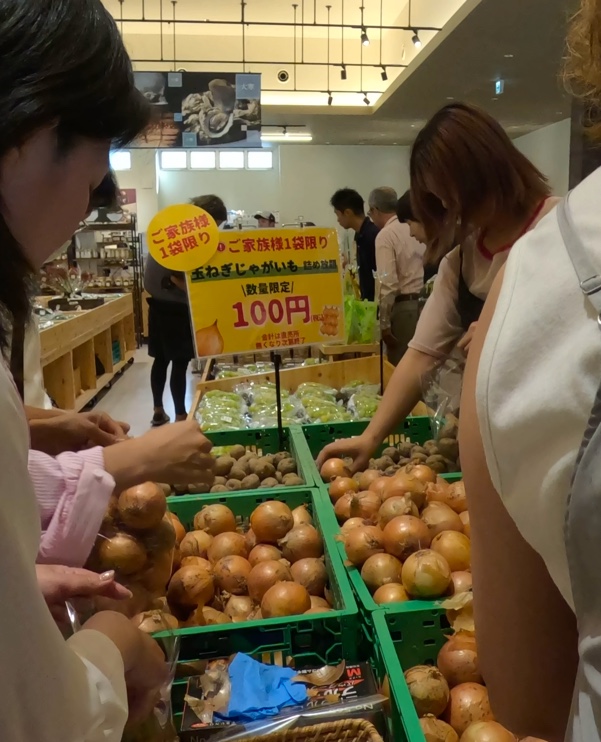
The Sunday market opened, and we wandered through the crowd, looking at vegetables and seafood and local goods piled high. But what I came away with wasn’t anything I bought inside. It was the feeling of connection with a man who’d shown me something he was proud of, in a place I’d never planned to visit.
What Makes Connection Possible
I’ve thought about that morning a lot since then. What made him invite me? What made me say, “Yes”?
I think it was two things meeting in the right moment.
First, my openness. Even though I’m shy, I asked a question. I showed curiosity about what was happening around me. That small act of reaching out signaled that I was someone willing to engage.
Second, his pride in his town. He wasn’t just being polite. He genuinely wanted me to know that Kainan had something worth experiencing. The manju shop is apparently only famous locally. It wasn’t on any tourist map. But it mattered to him, and he wanted to share it.
It takes courage to invite a stranger to follow you somewhere when you’re speaking a language you’re not entirely comfortable in. It takes trust to say yes when you’re not entirely sure where you’re going. Both of those things happened that morning because neither of us assumed the worst.
He didn’t see me as a foreigner to keep at a distance. I didn’t see him as someone with ulterior motives. We just saw each other as people who might have something to offer one another if we were willing to take the small risk of a two-block walk.
What This means for You
Recently, I’ve heard from you that one of the things you value most when traveling in Japan is making real connections with people. Not just polite exchanges, but moments that feel genuine.
I understand that desire. But I also know it can feel hard to know how to create those moments, especially if you’re shy or worried about language barriers or uncertain about how to read social cues in a culture that isn’t your own.
Here’s what I learned that morning in Kainan: connection doesn’t require fluency or confidence or even a plan. It requires openness and trust.
Be curious about what’s happening around you. Ask a question, even if it feels awkward. Smile at someone sitting nearby. And if someone invites you to see something they’re proud of, a manju shop, a quiet shrine, a family restaurant, say yes, even if you’re not sure exactly where you’re going.
The people who reach out to you in Japan aren’t doing it because they want something from you. They’re doing it because they want you to see what they love. And when you accept that invitation, you’re not just receiving their hospitality. You’re honoring the place they call home.
That box of manju is long gone. But the memory of walking down that street with a stranger who became a friend, even for just an hour, is something I still carry with me.
If you find yourself at a Michi-no-eki on a Sunday morning and the parking lot starts filling up with locals, don’t just watch from the sidelines. Sit down. Ask someone what’s happening. See where the conversation leads.
You might end up with the best manju in town. But more than that, you might end up with a story worth keeping.