The first time I visited Dotonbori, I didn’t know what takoyaki was.
I stood on the bridge crossing the canal, watching the people and the lights and the water moving underneath, and I just… wondered. About the city. About who had crossed this same bridge before me, what they were carrying, what they were celebrating or escaping. It was one of those rare moments of stillness inside absolute noise.
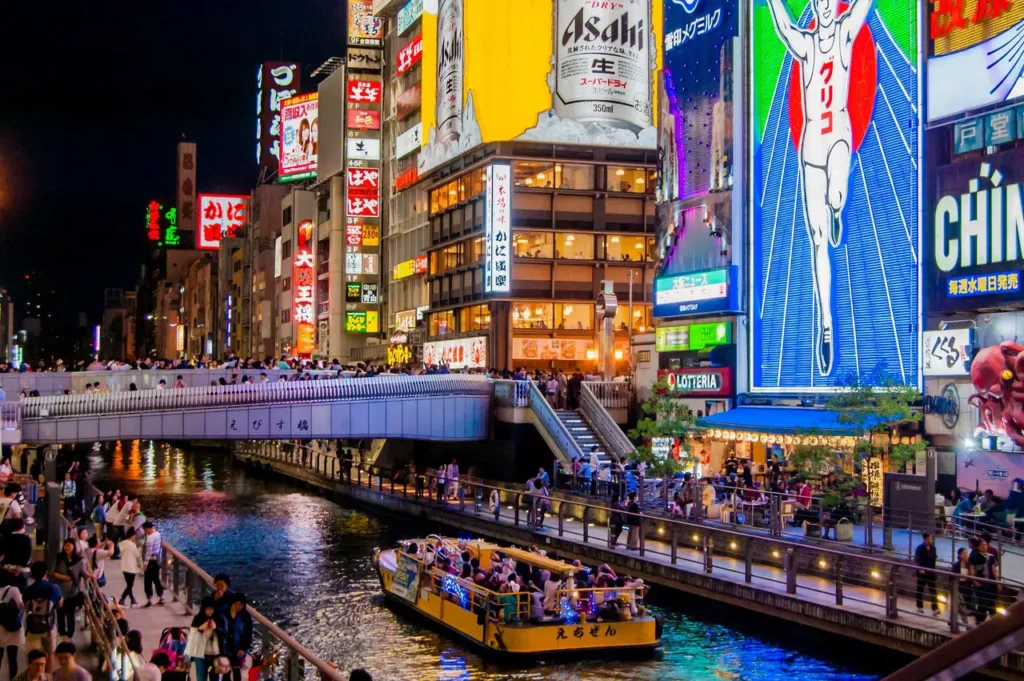
Then, in 2003, the Hanshin Tigers won the baseball championship and more than 5,000 people jumped from that same bridge into the canal below.
I watched it from the safety of my TV in Wakayama, equal parts amazed and horrified. But I understood it. Dotonbori doesn’t do quiet for long. It is a place built for intensity, and it will find intensity whether you invite it or not.
That memory is the most honest thing I can tell you about Dotonbori: it can hold a moment of genuine stillness, and it can hold 5,000 people losing their minds in a canal. Often on the same night.
So should you go?
Go once. Go at night. Then let the neighborhood’s edges point you outward.
The Case for Going
If it’s your first time in Osaka, skipping Dotonbori entirely would be like visiting New York and avoiding Times Square. You’d be missing the city’s loudest, most unapologetic version of itself and there’s real value in that.
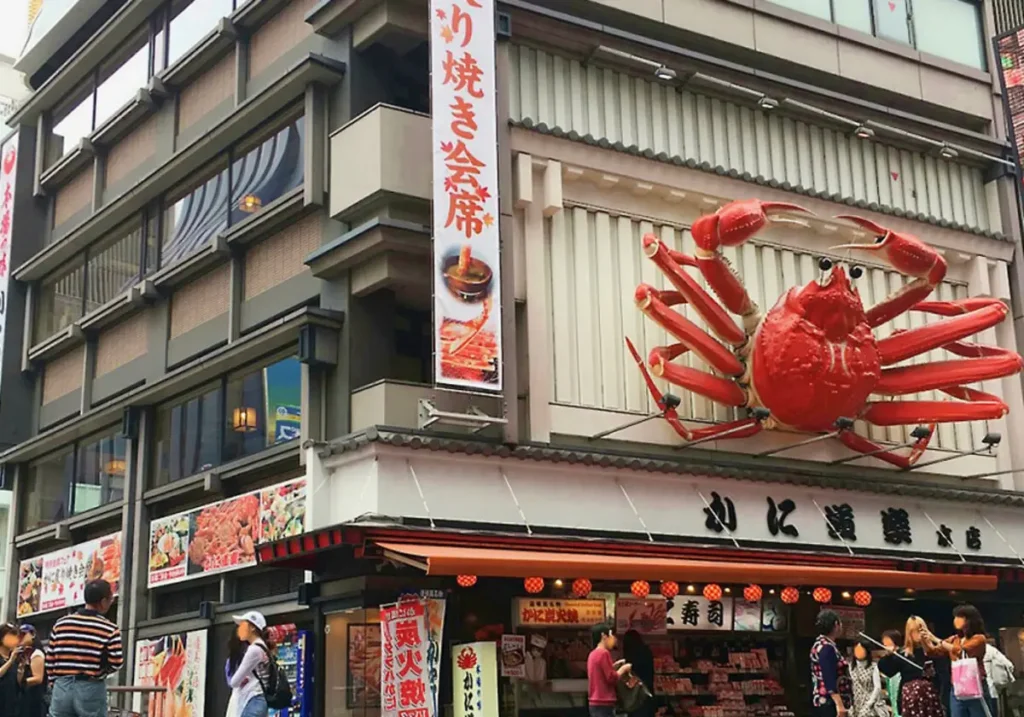
The neon signs stack three stories high. The giant mechanical crab rotates above a restaurant entrance. The Glico Running Man sign glows over the canal like a civic deity. Tourist boats drift past while selfie sticks fan out in every direction. It’s maximalist, chaotic, and completely alive. At night especially, it delivers.
It’s also conveniently positioned next to Shinsaibashi-suji and Namba, two of Osaka’s best shopping streets, so you’re not going out of your way.
The Case for Leaving Early
The crowds are exhausting. Not like “Tokyo Station at rush hour” kind of exhausting, but more like “Every tourist in the city decided today was the day” kind of exhausting. Many travelers I’ve spoken with say it’s the one place in Osaka that genuinely wore them down.
And the food? Dotonbori has been mythologized as “Osaka’s Kitchen,” a city famous for “kuidaore,” (食い倒れ) eating until you drop. But the version of that kitchen you’ll find in the heart of Dotonbori is designed for foot traffic, not flavor. The takoyaki is fine. The okonomiyaki is fine. You’ll wait in line for it, and you’ll pay a tourist premium on top.
Walk five minutes in any direction and you’ll find the same dishes, often from better vendors, at lower prices, and with room to breathe.
My Recommendation
See Dotonbori. Absorb the spectacle. Take the photos. Then let the neighborhood’s edges point you outward, toward the quieter streets, the local covered shopping arcades, the places where Osaka stops performing and just lives.
That’s where the food gets real. And if you want to know where I actually eat when I’m there, that’s a story for another time.