The first time I went to an Okonomiyaki restaurant, I had no idea what I was doing.
The server brought us bowls of batter mixed with cabbage, meat, and other ingredients I couldn’t identify. She gestured to the hotplate in the center of our table and explained, in rapid Japanese, how we were supposed to cook it ourselves. Then she left.
I sat there staring at the bowl, trying to figure out when to pour, how long to cook, when it was done, and whether I was supposed to serve myself first or wait for someone else to take the lead. My friends were chatting easily, but I felt frozen by the fear of doing something wrong.
Have you ever been in a restaurant in Japan where you weren’t sure what the rules were, and the uncertainty made you so self-conscious that you couldn’t enjoy the food?
That’s the moment I want to talk about. Not because I handled it perfectly, but because what happened next changed how I approach dining in Japan entirely.
The Shift that Mattered
I was so focused on my own nervousness that I almost missed what was happening around me. Then I noticed one of my friends’ glasses was less than half full. Without thinking too hard about it, I picked up the bottle and poured for them.
Something shifted in that moment. I stopped worrying about whether I was following the rules correctly and started paying attention to the people I was eating with. I noticed when someone’s glass needed refilling. I noticed when the Okonomiyaki was ready to flip. I noticed when to offer a piece to someone else before taking one for myself.
The etiquette I’d been so anxious about wasn’t a set of rigid rules I needed to memorize. It was just attentiveness. Once I started noticing others instead of monitoring myself, the whole experience opened up. The food tasted better. The conversation flowed easier. I felt like I was part of the meal instead of an observer trying not to mess up.
That’s when I realized something important: confidence in Japanese dining doesn’t come from knowing everything in advance. It comes from being willing to pay attention and adjust as you go.
Why This Matters for Your Next Trip
I know what it’s like to stand in a massive train station, stomach growling, surrounded by neon signs and unfamiliar menus, paralyzed by the fear of choosing wrong. You want that incredible Japanese meal you’ve been dreaming about, but instead you feel the rising panic of too many options and not enough information.
Maybe you end up at a familiar chain because at least you know what to expect. Or you wait in an hour-long line at a famous spot because at least other tourists validated it. Neither of those feels like the authentic experience you came to Japan for.
Here’s what I’ve learned after years of eating my way through this country, sometimes confidently and sometimes fumbling: the best meals aren’t always at the most famous places. And the skills you need to find them aren’t about research or language fluency. They’re about noticing, asking, and being willing to try.
What Helped Me Find Better Meals
Let me share a few things that changed my approach, not as rules to follow, but as shifts in thinking that might help you feel more capable when you’re standing in that train station wondering where to eat.
I stopped trusting the ratings I was used to. In Japan, a 3.5 on Tabelog (the local restaurant app) is genuinely good. A 3.8 is excellent. If you’re waiting for 4.5 stars, you’ll be standing in line with every other tourist in Tokyo. Once I adjusted my expectations and started trusting lower ratings, I found incredible meals with no wait and half the price.
I started getting off one stop early. Major hubs like Shinjuku and Shibuya Station are convenient, but the restaurants there are either chains or tourist magnets. One stop away, at a smaller neighborhood station, the quality goes up and the crowds disappear. It’s a small shift that makes a big difference.
I learned to follow the salarymen. Between 11:30 AM and 1:00 PM, if you see a group of office workers standing outside a shop with a ticket vending machine, you’ve found a place that’s fast, affordable, and consistently good. They’re not there for the ambiance. They’re there because the food is worth the short line.
But honestly, the biggest shift wasn’t tactical. It was realizing that I didn’t need to have everything figured out before I walked in the door.
A Meal I Never Would Have Found
My wife, Mika, has a friend who told her about a place called Kikuzen in Shirahama. From the outside, it’s a simple, traditional spot right along the railroad tracks. I probably would have driven past it assuming it was either too expensive or not worth the effort.
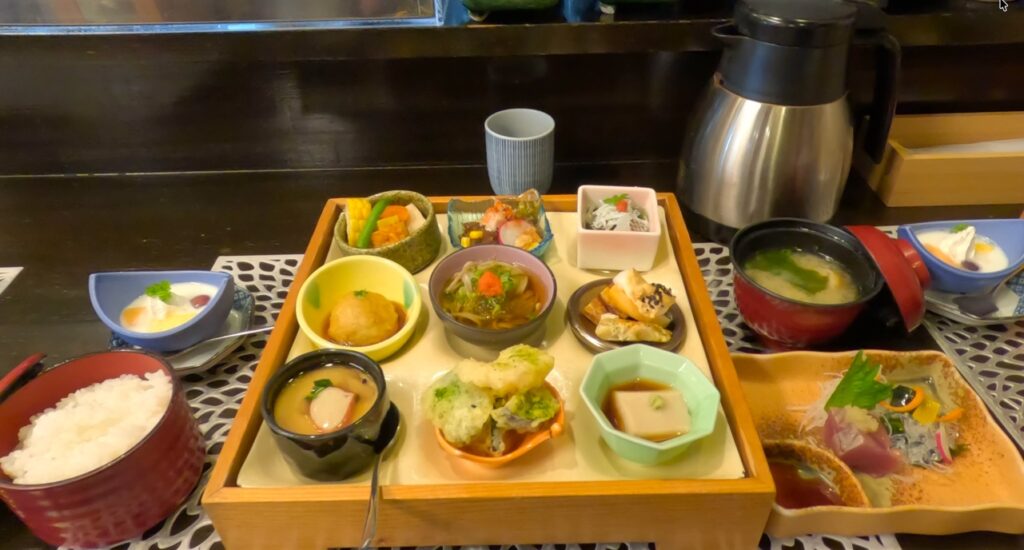
But here’s what I didn’t know: they serve an incredible lunch set to the first 10 customers of the day for around $10. It’s easily a $35 meal anywhere else. Fresh, beautifully prepared, and worth every bit of effort to get there early.
I never would have found that on my own. But Mika’s friend knew because she’d asked around, tried it once, and then told people about it. That’s how these discoveries happen. Not through perfect planning, but through curiosity and willingness to follow a local’s tip even when you’re not sure what to expect.
What I Want You to Take from This
You don’t need a Japanese spouse or fluent language skills or an encyclopedic knowledge of restaurant etiquette to eat well in Japan. You just need to be willing to notice, to adjust, and to trust that nervousness doesn’t mean you’re doing it wrong.
The next time you’re sitting at a table unsure of the timing or the rules, pay attention to the people around you. Watch how they move. Notice when glasses need refilling or when someone offers food before taking their own portion. The etiquette will start to make sense not as a list of rules, but as a rhythm you can feel.
And the next time you’re standing in a train station overwhelmed by options, try this: get off one stop early. Look for the salarymen. Check Tabelog and trust a 3.5 rating. Pick a place that feels a little uncertain and see what happens.
You might end up at a meal you’ll remember for years. Or you might fumble through the ordering and still have a good time. Either way, you’ll have taken a step toward eating like someone who belongs there, not someone just passing through.
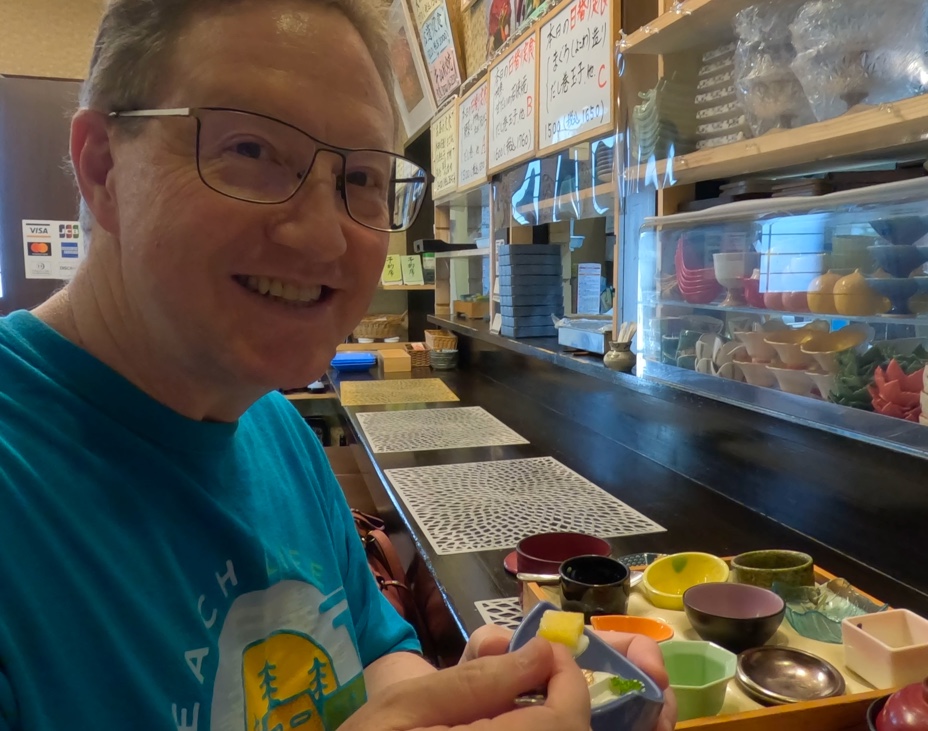
The best meals I’ve had in Japan weren’t the ones I planned perfectly. They were the ones where I showed up willing to learn, paid attention to the people around me, and trusted that I could figure it out as I went.
You can do that too. And I think you’ll be surprised how much more confident you feel once you try.