Kyoto is Overrun: Skip the Line and Find Real Japan in Shirahama

You’ve done your research. You’ve mapped out the perfect Japan itinerary. Tokyo for the energy, Kyoto for the temples, maybe Osaka for the food. But then you arrive, and something feels off. The line for Fushimi Inari snakes down the street. The bamboo grove at Arashiyama is shoulder-to-shoulder with tour groups. You’re paying more than locals at restaurants, and you can’t shake the feeling that you’re part of the problem.

A few months ago, I suggested to my wife that we take a day trip to Kyoto. Her response stopped me cold: “Why would you want to do that? It’s overrun with tourists right now and all you’ll end up doing is standing in line and paying more than what we have to pay here in Shirahama. Count me out. I’m staying in Shirahama!”

I almost defended the idea. Kyoto has temples I haven’t seen yet, restaurants I want to try. But her words sat with me. What was I chasing? Another checked box? Another famous spot where I’d spend more time managing crowds than actually being present?

I remembered my last trip to Arashiyama, trying to take a photo in the bamboo grove. I kept waiting for a gap in the crowd, repositioning, angling my phone to avoid the shoulders and backpacks filling the frame. I never got the shot I wanted. I left frustrated, not because the bamboo wasn’t beautiful, but because I’d spent twenty minutes trying to prove I’d been there instead of actually being there.

That’s when I started paying closer attention to what I already had here in Shirahama.

Shirahama is a small seaside town in Wakayama, about two hours south of Osaka. Most foreign travelers pass right by it on their way to somewhere more famous. But here’s what I’ve learned: the best of Japan isn’t always where everyone’s going. Sometimes it’s in the places where you have room to notice.

When I drive the coastal road around Shirahama’s small peninsula, I pull off to the side just to watch the waves meet the rocks. I’ve stood on the shoreline and seen tiny crabs scurry sideways into crevices, reminding me of the rich sea life in these waters. That abundance is why the Tore-tore Ichiba fish market feels like the heartbeat of this town.
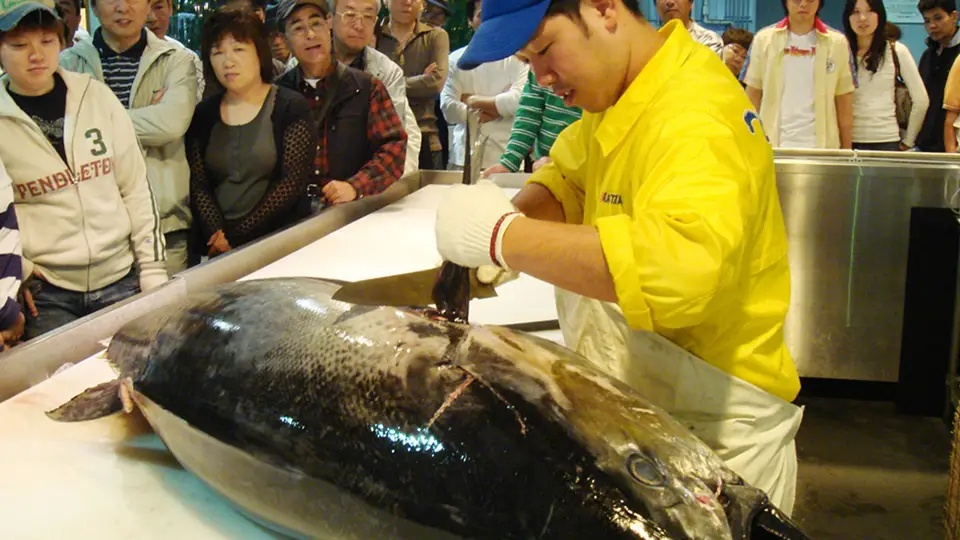
The crowd gathers around to watch the carving of the tuna.

I’ve watched vendors slice through massive tuna with precision, the crowd leaning in as the deep red flesh is separated into perfect cuts. The energy when that fish goes on sale is something you feel in your chest. People calling out bids, vendors negotiating in rapid-fire Japanese, everyone knowing this is as fresh as it gets.

I learned to come back in the late afternoon. That’s when the vendors start marking everything down to half price. A vendor once caught my eye when I hesitated over a piece of tuna. “Half price now,” he said, “but tomorrow it’s gone. We don’t keep yesterday’s fish.”

That’s when I understood. It’s not just about freshness. It’s about respect for what the ocean gave them.

I know this same fish gets transported to Kyoto and served at triple the price in pristine restaurants. But why wait in line and pay exponentially more when I can buy it here, minutes after it’s been cut, and taste the ocean in every bite?

After a meal like that, I’m left with what my wife would call a very serious dilemma: which onsen should I visit tonight?

I used to think a great day in Japan meant hitting three temples and a famous restaurant. In Shirahama, a great day means slowing down enough to notice you’re already satisfied, and still having the whole evening to yourself.

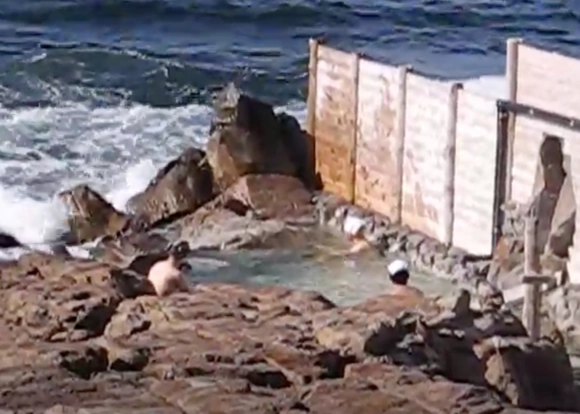
Some Japanese travel to Shirahama only for the hot springs. The town is known across Japan as an onsen destination, which means there are more options than you could visit in a week. But my favorite is Saki no yu, a hot spring built right along a rocky shore.

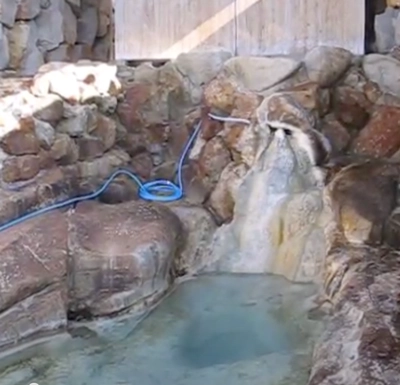
Spring source at Saki no Yu in Shirahama Japan
The hottest tub at this "Saki no Yu" hot spring is located at the spot where the hot water naturally emerges from the ground.

On the men’s side, there are three tubs. The first is the hottest. This is where the spring flows directly from the source. The rock around it is stained with layers of white and orange minerals from years of water flowing through. The smell of sulfur used to feel strange to me. Now it’s nostalgic, tied to the comfort of sinking into that heat after a long day.

The second tub is slightly cooler, but it’s the third one, the one closest to the ocean, that I go to last. This is where the mild heat lets you stay longer, and where the salt water occasionally splashes up and over the edge, mixing with the spring. The cool spray on my skin, the combination of salt and sulfur, the sound of waves against rock. It’s less than $4 to get in, and I leave feeling like I’ve been given something I didn’t know I needed.

Saki no Yu hot spring by ocean in Shirahama Japan
Cool water from the ocean waves splashes in this third tub at times giving it a moderate temperature and a little saltier water quality.

When I step outside, the evening light is starting to change. If I’ve timed it right, the sky is turning orange and pink over the water. There’s something about watching the sunset after soaking in that spring, your skin still warm, the sulfur smell faint in the air, that makes you grateful you came to Shirahama.

This is what Shirahama has taught me: overtourism isn’t just about crowds. It’s about losing the space to notice. It’s about the gap between experiencing something and rushing to the next thing on your list.

When you’re standing in line at Kinkaku-ji with a hundred other people trying to get the same photo, you’re not really there. You’re performing the idea of being there. But when you’re sitting in an onsen watching the light change on the water, or tasting tuna that was swimming this morning, or pulling off the road because the view made you slow down—that’s when Japan opens up.

I know it’s tempting to fill your itinerary with the famous spots. I used to do the same. But if you’re willing to trade one more temple for an afternoon where the only line you’ll stand in is watching vendors carve up tuna, Shirahama will give you something Kyoto can’t right now: the room to be present.

My wife was right. Sometimes the best trip isn’t about going somewhere new. It’s about finally noticing where you are.

Japanese Language Tip

Learn Japanese on notebookHere is one of the most important Japanese words I learned during my time in Japan, and it perfectly sums up the Shirahama philosophy:

もったいない (Mottainai)

While often translated simply as “What a waste!” or “Don’t waste it!”, mottainai is a word with deep roots in Buddhist philosophy. It expresses a sense of regret not just over physical waste (like food or objects), but also the waste of potential, time, or opportunity.

In the context of your trip, think of it this way:

When you rush through a beautiful temple just to check it off your list, that is mottainai. You are wasting the opportunity to be present and appreciate the sacred space.

When I heard the vendor tell me about the half-price tuna, “tomorrow it’s gone,” he wasn’t just talking about freshness; he was urging me not to let the exquisite taste of that moment go to waste. That is the essence of mottainai.

In Shirahama, I finally stopped performing the idea of being there and started being there. Don’t let your vacation become mottainai. Take the time to notice.

Scroll to Top