If you visit Osaka, it’s easy to find yourself moving quickly. Osaka Castle, polished and informative. Dotonbori, glowing with neon and familiar photo spots. You’ll enjoy yourself. Most travelers do.
But at some point, you might notice the pace. The sense that each stop comes with an unspoken script about where to stand and when to move on.
If you’re looking for something that lets you slow down, I want to tell you about a day in Osaka that gave me exactly that. A morning that felt meditative. An evening that felt alive. Both sides of the city, both worth your time.
A Morning that Asks Nothing of You
This started with a conversation I had with a woman who grew up in Osaka. I asked her where she goes when she needs a break from the city’s energy. She didn’t hesitate.
Sumiyoshi Taisha.
Not as a tourist highlight. As a place she returns to for herself. She explained that the shrine existed long before Buddhism arrived in Japan, and its architecture still reflects that pure Shinto origin. “It isn’t pretty in the way people expect,” she said, choosing her words carefully. “But it’s dignified.”
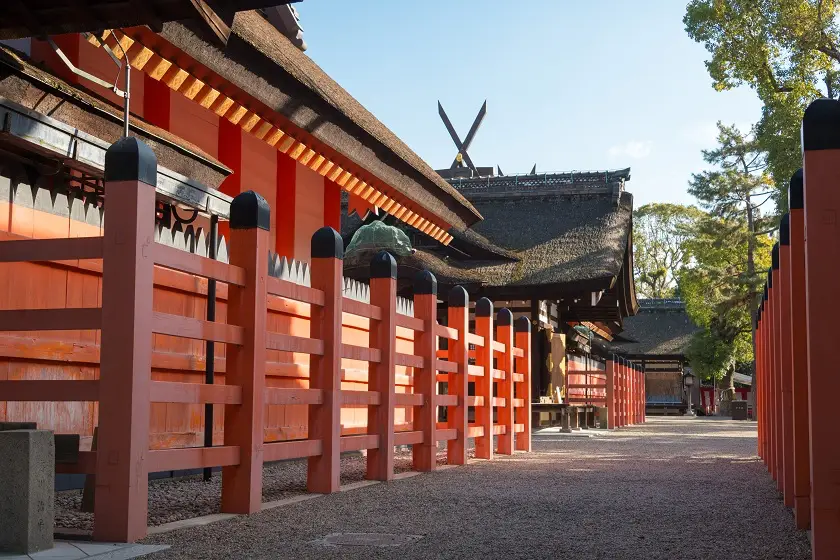
When I visited, I understood immediately.
The shrine sits quiet, even on weekends. No tour buses idle nearby. No crowds funnel you toward the next photo spot. You arrive, and the first thing you notice is the Taikobashi Bridge arching over a small pond. It’s painted red, steep enough that crossing it feels like a small ceremony in itself. But you don’t have to cross it to feel its presence. You can stand at the edge and watch others make that slow climb, pausing at the top before descending the other side.
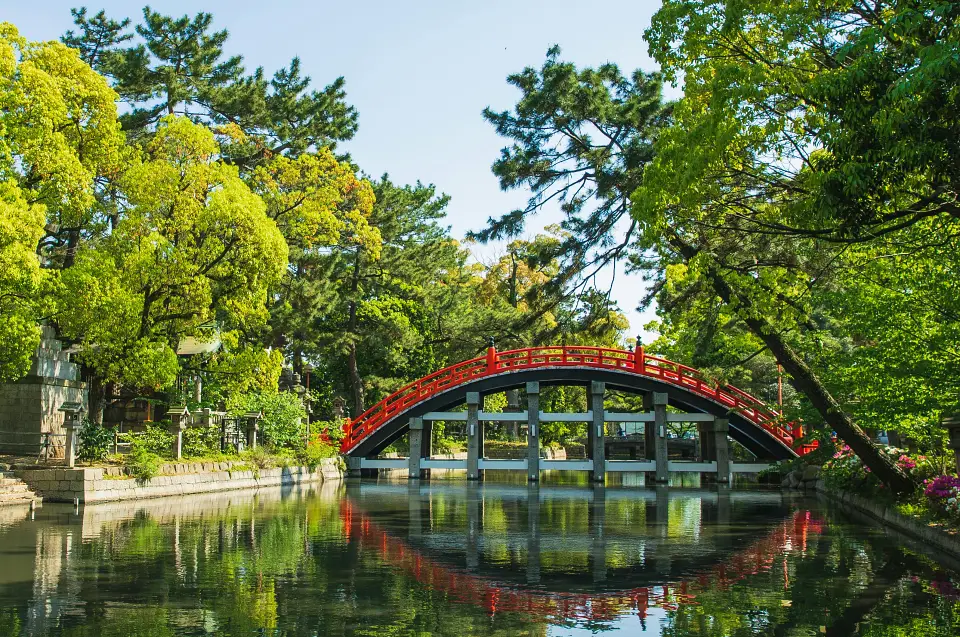
It feels like a threshold. Like stepping from the noise of the city into a different kind of space entirely.
The shrine’s architecture is what stayed with me most. Straight lines instead of the curved temple roofs you see elsewhere in Japan. Heavy beams that cross and lock into place with a precision that makes you realize this structure has stood for over 1,800 years. No nails. No modern shortcuts. Just wood, engineering, and intention.
It doesn’t ask for your attention. It waits for it.
I stayed longer than I planned. I watched people arrive quietly, offer prayers, move through the grounds at their own pace. No one was performing. No one was rushing. The silence wasn’t empty. It was full of something I can only describe as depth.
My friend had warned me about one thing: New Year’s. That’s when locals flood the shrine for their annual visits. It’s meaningful, she said, but crowded. “Any other time of year, especially a weekday morning, it’s peaceful.”
That detail matters. It’s the difference between visiting a place and experiencing it the way it’s meant to be experienced.
An Evening Where Locals Gather
After a morning like that, she told me, there’s a neighborhood she often takes visitors to eat. Tsuruhashi.
Tsuruhashi doesn’t introduce itself. It doesn’t explain what it is or apologize for not being picturesque. It’s a Korean-Japanese neighborhood where people shop, argue about barbecue, and gather around tables that feel more like family dinners than restaurant service.
When you arrive, the first thing you notice is the smoke. It drifts out from yakiniku restaurants lining the narrow streets, carrying the smell of meat searing over charcoal. Inside, the tables are loud with the kind of camaraderie that only happens when people aren’t performing for anyone. Friends leaning in, voices rising over the sizzle of the grill, laughter that doesn’t pause for outsiders.
There aren’t as many English signs here. No photo zones. No sense that anyone is curating an experience for tourists. This is where Osaka locals bring the people they actually want to feed.
The contrast with the morning is deliberate. Sumiyoshi Taisha asks you to be still. Tsuruhashi asks you to join in. Both feel like authentic sides of Osaka, just expressed in completely different registers.
A Day that Feels Complete
You don’t have to skip Osaka Castle or Dotonbori to experience this side of the city. But if you’re willing to carve out one day for something quieter in the morning and something more grounded in the evening, this pairing will give you a version of Osaka that most visitors never see.
Start early at Sumiyoshi Taisha. Let the shrine’s stillness reset whatever the previous days of travel have accumulated. Stand by the bridge. Notice the beams. Watch how locals move through the space with a kind of ease that only comes from returning to a place that’s theirs.
Then, in the evening, head to Tsuruhashi. Find a yakiniku spot that looks full. Order what the table next to you is eating. Let the smoke and the noise remind you why you came to Japan in the first place, not just to see it, but to be part of it, even for a night.
This isn’t the Osaka you’ll see in brochures. But it might be the Osaka you remember most.